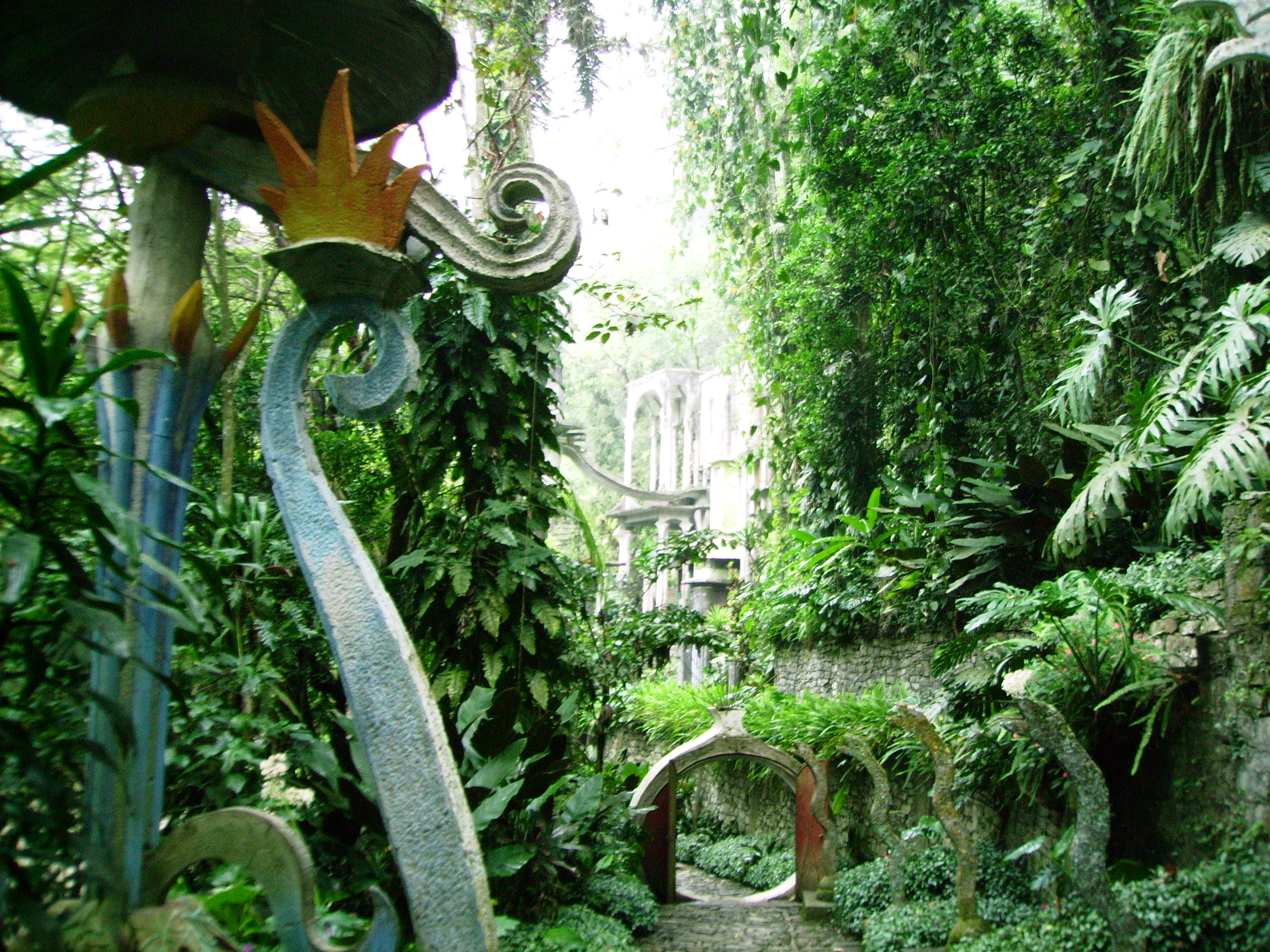
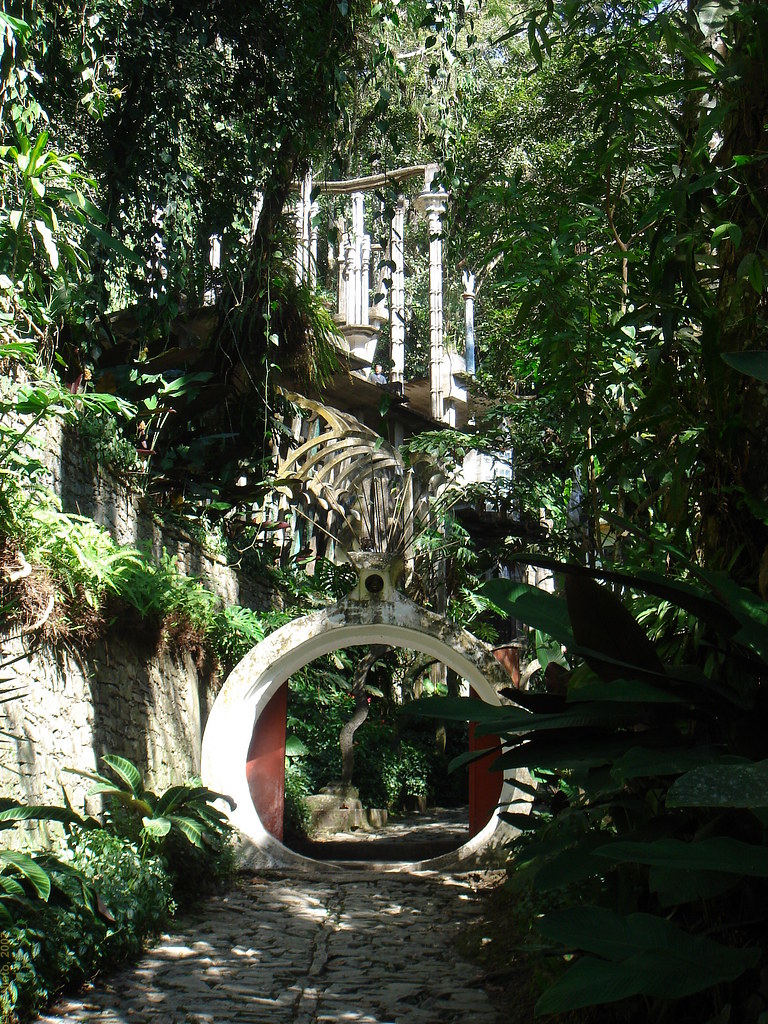
If you wander away from the town of Xilitla in Mexico and enter the tropical rain rainforest then you are likely to come across something unexpected but extraordinary. The jungle, at over 2000 feet above sea level, retreats to uncover 80 astonishing acres of pools, buildings, statues and walkways. You have just discovered Las Pozas (
The Pools in English).
You could perhaps be forgiven that you have stumbled upon the remains of a city which had been inhabited by some offshoot of Aztec culture: before they abandoned it they created surrealist art hundreds of years before its time.
Yet the garden, a ten hour drive north east of Mexico City, was dreamed up by someone born on a different continent, the eccentric and flamboyant British poet Edward James (pictured left).

James was from a singularly privileged background. Born in 1907 he was the sole male heir to the fortune of the American railroad magnate William James. James senior was a britophile who had married a Scottish socialite and settled in the UK. His father died when he was five years old, leaving him very, very wealthy. When his mother died he inherited a second fortune.

Money can’t buy you one thing and certainly James’ social connections and Midas like wealth were not to bring him great happiness. Uncertain of both himself and those around him by sheer dint of his enormous prosperity, James entered a disastrous marriage complicated by his latent homosexuality and led a tortured and restless existence. In search of somewhere and something he would eventually come across a magical glade of pools and waterfalls in Mexico and make it his home and his life project – and find his own kind of peace.

However, that would not be until his forties. James’ attempts to get a ‘proper’ job in his younger years were always sincere but never successful and Edward James became a noted and generous benefactor to the arts. He sponsored the publication of John Betjeman’s first volume of poems. He commissioned Brecht and Weill’s last work together, The Seven Deadly Sins. He supported Salvador Dali for a whole year (1938) and allowed René Magritte to live in one of his London houses for two years. He was one of the movers and shakers of the world art community in the 1930s, surrealism’s early and great champion.

James tired of Europe and particularly England in the late 1930s. He went first to New York and then to Taos in New Mexico where he lived in an artist’s colony for some time. Time in Hollywood saw the multi-millionaire meet and befriend some of the more notable names of the day, including Man Ray, Aldous Huxley, Christopher Isherwood and Igor Stravinsky.

His background of wealth may have contributed to James’ inability to root himself anywhere for a long period. However, when he washed up in the Americas in the early 1940s all that was about to change. He had arrived on the continent with a surrealist vision – albeit a fantastically expensive one. Las Pozas was about to be born.

The search for the ideal location would take five years. James had planned for the garden to be in Los Angeles but had decided that Mexico was more romantic than overcrowded California.
He befriended a dazzlingly handsome young telegraph office manager, Plutarco Gastelum - left in a painting by Carlyle Brown. This was while he was visiting Cuernavaca, the capital and principal city of the state of Morelos in Mexico.
Together they headed off in to the jungle and found Xilitla (which you pronounce
Hill-eet-la) towards the end of 1945.
James never lived there permanently as his art and business interests took him all over the world but his long visits would at Xilitla would be happy ones up to his death in 1984. Plutarco built James a house (which is now a hotel). Uncle Edward as he became known was soon surrounded by children as Plutarco married a local woman, Marina, had four children with her and moved in with his employer. No one can say for sure whether Plutarco and Edward had had a sexual relationship but one thing is known: at the wedding Edward James got himself monumentally drunk.

Yet instead of running back to England in a sulk, James continued to visit for long periods and became godfather to the offspring of Marina and Plutarco.
The children were not short of pets – as Las Pozas grew so did James’ menagerie – he owned 200 birds and 40 dogs. He also had a number of boa constrictors which he once took on a trip to Mexico City.
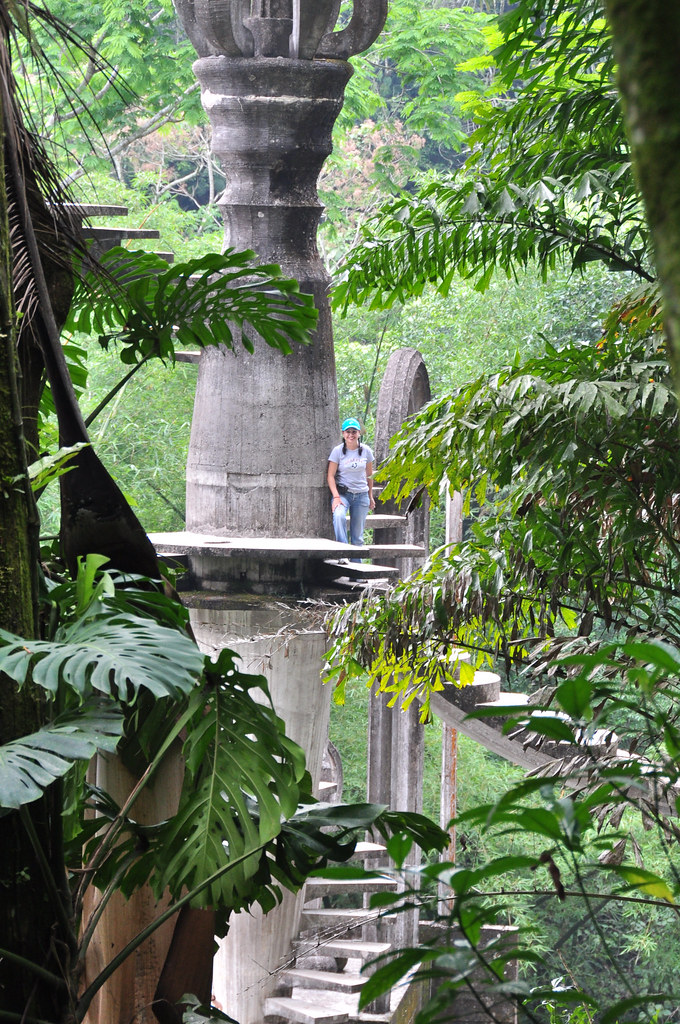
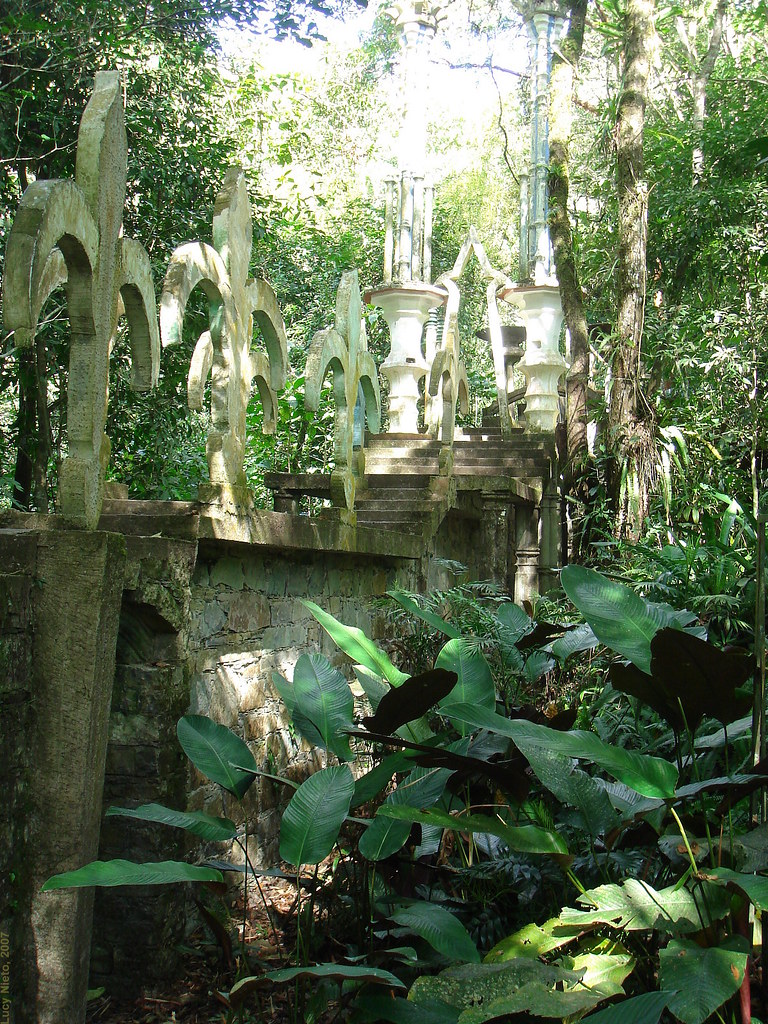
As you might imagine, Las Pozas took a considerable amount of time and money to create and James did not consider it complete even when he died in 1984. There are thirty six concrete follies in the garden, a combination of pagodas, temples and palaces – all of which are not quite what they seem on first inspection. Unfortunately, too, James failed to provide enough money for it to be properly looked after when he was dead. It took some looking after, too.
It has to be said that James was, quite probably, irretrievably bonkers, in that very English way; perhaps something like a character from a Waugh or a Christie novel. As he became elderly he would be carted around his property, with parrots in tow.
He would request that workers in the garden conduct their duties in the nude (they happily obliged) and he fired one worker for interrupting him while he was having a conversation with an orchid (though he was later reinstated).

But what a legacy! Some of the sculptures at the site, like the Staircase to Heaven and House on Three Floors Which Will in Fact Have Five or Four or Six are simply enormous. Bridges, ramps, steps and walkways abound in intricate patterns throughout the site. Altogether the garden cost over $5 million – a large enough sum now let alone then. In order to create his own surrealist heaven, however, James had to auction off his own collection of art which at the time was looked upon as the finest collection of surrealist art in private hands.


This amazing sculpture garden is, however, showing signs of age. The ravages of time and the jungle have not been kind to it and four years ago a foundation was created by concerned parties, including the local state government, to pay for, sustain, preserve and restore Las Pozas. The only son of Plutarco and Marina, Kako, is one of the management team. We will, perhaps, be hearing more about this marvelous and labyrinthine garden in the future as it is hoped that it will take its rightful place on the global art map sooner rather than later.