24 May 2025

Ffos Anoddun: Secrets of the Fairy Glen

Nestled in the heart of the North Wales countryside is a secluded spot known for centuries as Ffos Anoddun.  It is better known, outside the country by its English name – Fairy Glen. Yet there is a little something lost in translation.  The Welsh name literally translates as the Ravine of Annwn – which has altogether darker connotations. In Welsh mythology, Annwn is the Otherworld, a realm of eternal youth, beauty, and abundance, often associated with fairies and the afterlife. This connection adds a layer of mystique to the already enchanting landscape of the place. But the fairies you might find here are not those you will see in Disney films, for certain sure.
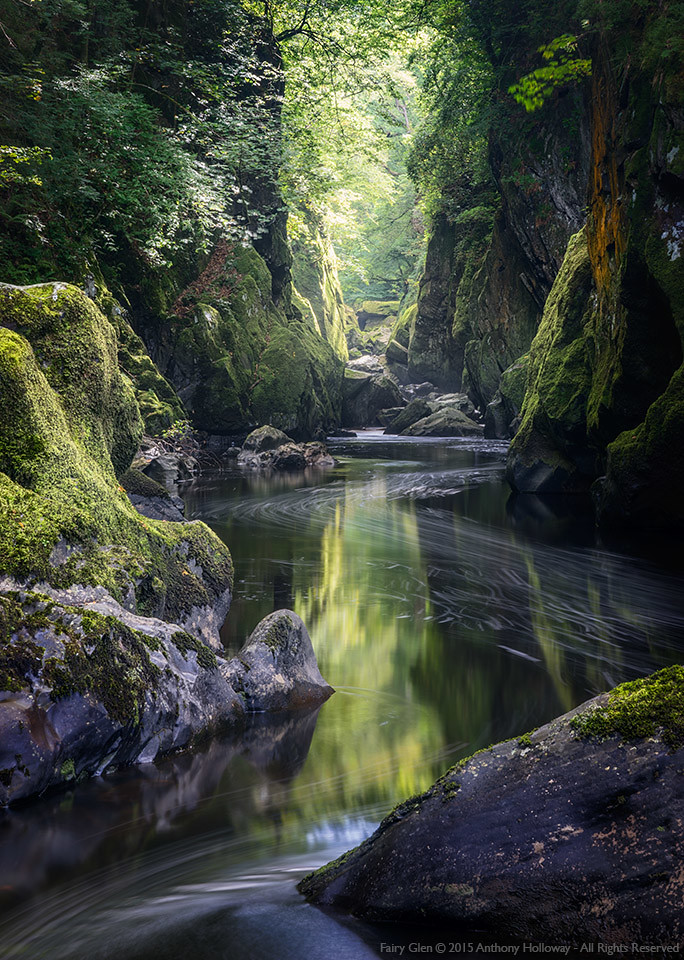
Fairy Glen Ffos Anoddun is located just outside the village of Betws-y-Coed (which means "Prayer House in the Woods" but is never referred to in translation). It lies along the River Conwy, nestled within a wooded valley - we'll take a look at the journey there shortly. The site is accessible via a short, steep path from a nearby car park off the A470 road, making it a popular spot for visitors seeking picturesque waterfalls, mossy rocks, and a magical woodland atmosphere. Not to mention fairies.

Let's stop for a second...

23 August 2020

If You Have Never Wanted to Visit North Wales, You Will After You Watch This


North Wales (or Gogledd Cymru as it is locally known) is well known in the UK as a place of outstanding natural beauty but the rest of the world seems to only be half aware that this little piece of very wet paradise exists. Well, obviously, we have got to help put that right! Howard Litherland has created this wonderful homage to North Wales which showcases the spectacular beauty of this wonderful land.

21 January 2013

Y Mynyddoedd Grewyd Gan Ddyn - Man Made Mountains


A word of advice before you watch this video – it has a rather slow burn effect (which may be a nice way of saying it takes a minute or two to get going and for things to become clear).  Yet bear with it – because your jaw may well be a little slack by the end.  Some background first – North Wales dominated the world slate market for over a century but that time is now over and only a tiny fraction of the slate industry is left.

Yet this bastion of the Welsh language is (literally) littered with the remnants of this immense and intensive engineering and manufacturing period of cymric history. For every tonne produced over thirty tonnes would be discarded as waste product. My family on my father’s side hail from North Wales and many of my visits there in my youth were slate associated. My father’s great Aunt Ginnie’s house perched precariously underneath one of these huge man made mountains. I used to wonder what would happen if it all fell at once.

The sight of these gargantuan piles of industrial detritus is, indeed, at once glorious and disheartening.

This piece, with information in both Welsh and English, is a collaboration between artist and photographer Bob Mitchell and the filmmaker Jonny Maxfield.  Huge – and I mean huge – photographic images were created and displayed at windswept installations around the old industrial sites and then simply left to merge with the environment. 

The artistic process as well as that of slate production as it is today is captured by Mitchell and Maxfield with some wonderful time-lapse and still photography. It fills me with hiraeth and, I must admit, with what can only be called anti-hiraeth at the same time. The slate industry was the economic power house of North Wales for a long time but it is for many, too, a symbol of Welsh oppression. Yet this film celebrates the people not the politics.

This project was supported by the Arts Council of Wales, Gwynedd Council, Snowdonia National Park, The National Slate Museum, Llechwedd Slate Caverns and Tudor Lodge – Porthmadog.