14 December 2011

The Thames Sea Forts - From War Machines to Eco Warriors

What do you do with a number of rusty old seventy year old sea forts that still tower above the waves once they have done their job? The possibilities are huge if not quite endless.

Who do you think you are kidding, Mister Hitler? went the song, if you think old England’s done? And England certainly wasn’t an island ready to give up in the darkest days of the Second World War. The country came up with a number of strange but hopefully effective ways of defending itself. One of the most striking was the concept of the Maunsell Sea Fort. Today, their remnants slowly molder, obeying the laws of entropy. Is it too late to stop them from sinking to a watery grave and give them a new lease of life?

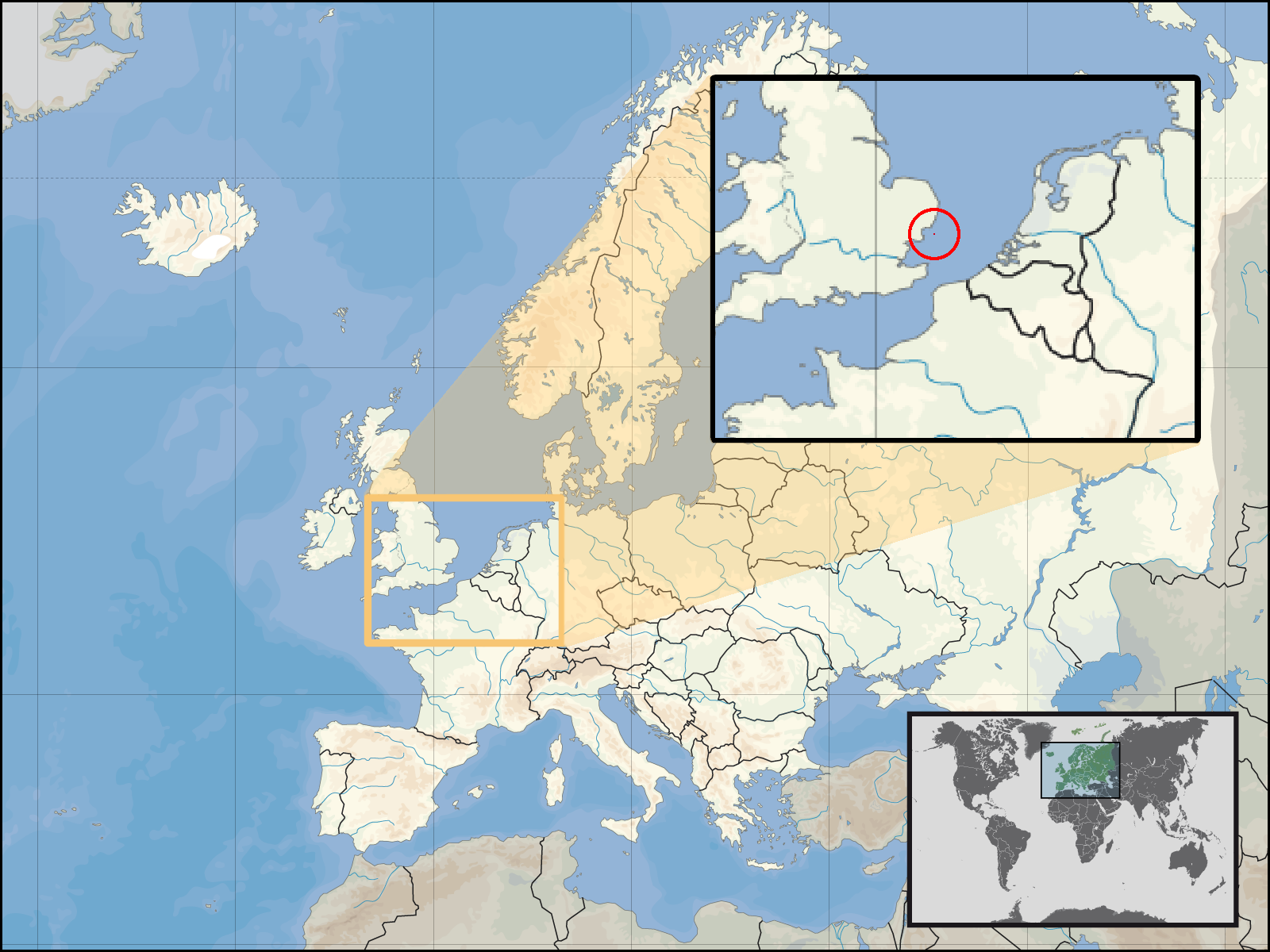
The Maunsell Sea Forts occupied positions in the Thames and the Mersey estuaries during World War Two. The rivers were vital in terms of transporting food and the vital equipment needed to sustain the beleaguered island and were designed to protect the two most important ports in the United Kingdom – those of London and Liverpool. The ones designed for anti-aircraft defence, such as those pictured, remain by far the most striking. Although people are strongly advised not to enter on safety grounds, you can still see the ladders at the base of the far one – an invitation to the foolhardy seafarer.

Britain wasn’t going down with a fight and designer Guy Maunsell was up to the challenge. As France fell to the Nazis the Germans were beginning, with frightening regularity, to target the Allied ships in the Channel. Moreover, enemy planes were finding that their route to London Docks was unhampered by much resistance. The Admiralty sought out Maunsell and demanded that he create five new sea forts. The foundations were sunk in to the seabed in a way that allowed the movement of shingle and sand around them.

Seven steel platforms, interconnected, carried five guns in a semi-circle. At the middle of the diameter of this semi-circle there was the control tower. The seventh structure was for a searchlight. In their heyday they must have been something to behold. The design of the towers above water was based very much on the gun batteries found on shore.

It was a proven design and would enable the towers to be defended with a greater degree of success. If you are worried about how the men would get between the forts then don’t. There was a system of sturdy, tubular steel walkways between the towers that ensured no unfortunate plunged in to the sea.

From a distance they do not look very large. However, take a look at the amount of windows that overlook the sea on two floors (with what looks like pretty high ceilings). The forts were decommissioned in the 1950s, due to their deteriorating condition and an accident (a collision with a Norwegian ship which killed four people). So, what to do with them once their military job was over? The Maunsell designs were used extensively in the development of drilling platforms and offshore fuel exploration. The forts themselves were the blueprint for the very first offshore oil platform – situated in the Gulf of Mexico – before 1950. For this very reason alone they are artifacts of immense historical significance. Discarding them would be something akin to throwing away an Apple Lisa because you have an iPad 2.

Preservation had not been something taken seriously until early in the new century. Before that they had been used for a variety of activities, such as pirate radio in the nineteen sixties and the establishment of the Principality of Sealand in the same decade. Since 2003, however, serious talks have been held between concerned parties and the Government Agencies that have overall responsibility for the towers.

Project Redsand was set up to try and rehabilitate and preserve the Redsand Towers. These had the code name ‘Uncle Six’ during the war and it was these towers which were chosen as they are the nearest to land and safely away from the main shipping lanes (so another unfortunate accident can be avoided in the future).

With all such projects, things move terribly slowly and the government is still pondering on whether or not to make the Redsands Towers a listed building (which would give it protection under law in the United Kingdom). However, a new safe access system has been installed and materials to assist the project are being slowly but surely donated. Meanwhile the people behind the project are applying for grants to help with the restoration project. This will be done by the formation of a Charitable Trust.

Each tower on the fort will be restored one by one – and it is hoped that when each one is complete it will be put to immediate use. There are many ideas about what the towers may become – foremost it is hoped that they could be used by marine biologists from which to conduct experiments, such as the effect of global warming on local marine ecosystems.

Until then the living quarters are somewhat limited in terms of luxury! It is hoped, however, that there will also be the facility to experiment on researching a way to withdraw hydrogen from seawater on a large scale basis. Other ideas have been posited. There may well be a wartime museum or even, as in the sixties, a broadcasting system installed.

Their uses are almost on an endless ‘answers on a postcard’ basis. Other ideas have been that they could be used for assault training. On a rather more peaceful basis, it has been suggested that exclusive corporate events and weddings could be held on the towers. Whatever the final (and possibly varied) use of the separate towers it is hoped that the forts will generate enough money to ensure that in the future they can effectively protect itself. In the meantime you can still take a trip around the forts – for a small fee.

England may have seen off the threat of Hitler many years ago. It can only be hoped now that these remarkable sea forts can fend off time and disinterest in the same successful manner.

As a footnote – we do know that Who Do You Think You Are Kidding Mister Hitler was a pastiche of a war time song, created especially for the TV sitcom Dad’s Army. Just thought we would point that out before you start making comments!

10 January 2011

The Principality of Sealand

By Guest Blogger Dan Lewis
Editor of Now I Know
Dan Lewis is the force behind the free daily email service Now I Know.  Like the old adage you learn something new every day, Now I Know feeds your mind with a variety of different things each day with which you can impress your work colleagues, friends and family.  Or not.  Whether you keep this new knowledge to yourself is up to you. However, you should really think about subscribing - click the image to take you there or subscribe to his newsletter here.

During World War II, the English Channel and North Sea were, understandably, thoroughfares of war.  These bodies of water, together, separated England from mainland Europe, and the United Kingdom took advantage of the terrestrial barriers by building sea forts housed with troops and artillery.

One of these sea forts, Roughs Tower, was built above a sandbar (Rough Sands) roughly seven miles off shore.   Made of two hollow towers joined by a deck, Roughs Tower housed between 150 and 300 naval personnel throughout the War, and remained in use through 1956.

Roughs Tower was unique from the other sea forts for two reasons: First, the other bases were pulled down after the British navy was done using them.  Second, Roughs Tower is in international waters.

More than a decade after it was last used by the military, Roughs Tower found itself in use again.  In late 1967, Major Paddy Roy Bates, a pirate radio broadcaster, occupied the fort with the intention of broadcasting his radio station from there.   He didn't stop there.  Realizing that he was in international waters, Bates turned Roughs Tower into -- at least in his view -- a sovereign nation, The Principality of Sealand, with Bates bestowing upon himself the title Price Roy of Sealand. 

The next year, Bates took action to protect his perceived independence.  Workmen entered Sealand's territorial waters to repair a navigation buoy, and Bates' son, Michael, taking this as an act of aggression (Sealand's website states that "[u]nits of the navy entered the territorial waters claimed by Roy of Sealand") fired warning shots at the workmen-turned-trespassers.    Being a British subject at the time, Michael was brought up on charges, but the British court determined that the courts had no jurisdiction over the incident because it occurred outside of Britain's ordinary territorial limits.

Sealand uses this finding as Exhibit A in arguing that other nations have recognized its sovereignty.   In fact, Britain itself once relied on the decision to disavow itself of responsibility for Sealand's actions.  In 1978, a group of Dutch men, hired by a Alexander Achenbach, a German citizen, attacked the island/platform/nation and took Michael Bates hostage.  Roy Bates, with the help of his own mercenaries, was able to retake Roughs Tower, but refused to release the Achenbach, who held a Sealand passport.  Germany, Austria, and the Netherlands petitioned the British government for help, but the UK declined citing the 1968 decision above.   Achenbach was eventually released, per Sealand's official history, as to "not bloody the reputation of Sealand".

Since then?  Sealand still exists, under the reign of the Bates family, although as of January 2007, they're looking to "sell" the country.  (They probably won't accept Sealand issued coins, pictured above right.) Or, at least, turn their story into a movie.


Bonus fact
In 1941, a small group of people from parts of California and Oregon tried to secede from their parent states and form the State of Jefferson, situated in the Pacific Northwest.  Their secession efforts ended abruptly when, at the end of the year, Japanese forces attacked the United States at Pearl Harbor, as many of the secessionists joined the war effort.